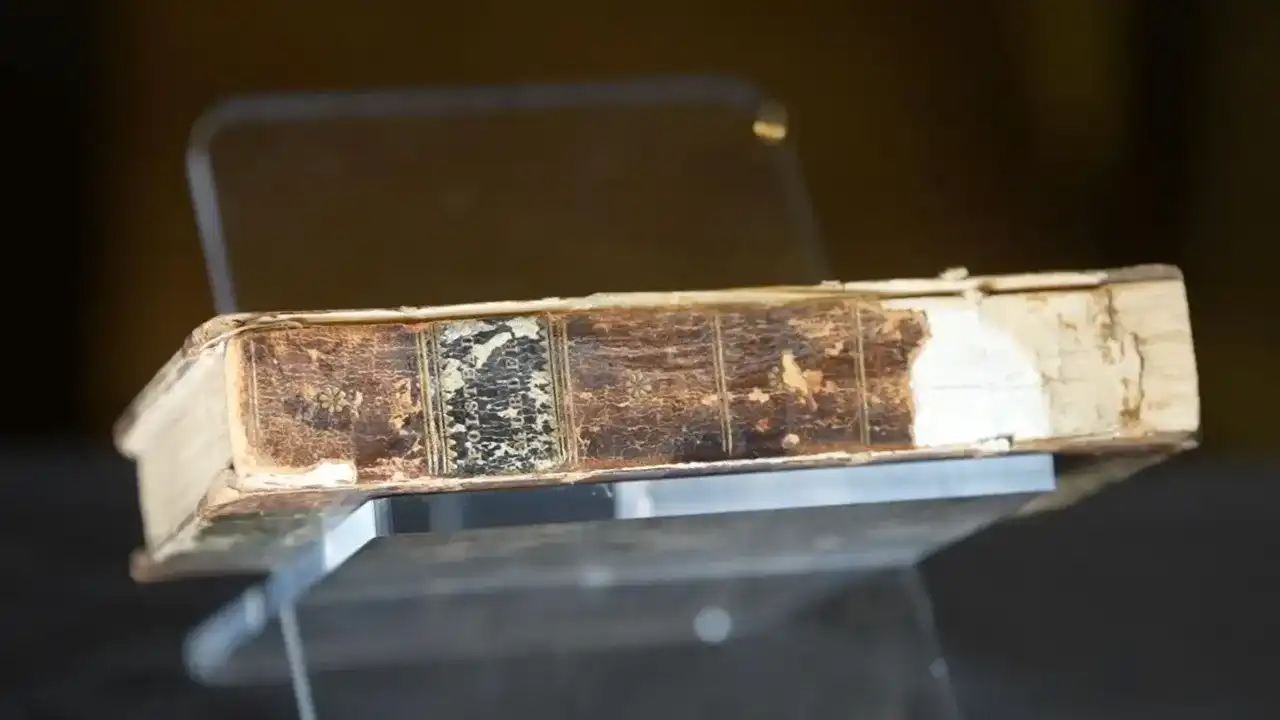
Museum to display book bound in skin of notorious murderer William Corder
A book bound in the skin of one of the UK's most infamous murderers is set to go on display after being discovered in a museum's office. This book is made from the skin of William Corder, who was convicted of the Red Barn Murder in 1827, where he killed Maria Marten. The book will join another similar item at Moyse's Hall Museum in Bury St Edmunds, Suffolk.
Dan Clarke, the museum's heritage officer, emphasized the "incredibly important" historical value of these books, noting he has never received complaints about the first one on display. However, Terry Deary, author of Horrible Histories, criticized the artifacts as "sickening," stating, "These are two books I'd like to burn."
The 1827 murder shocked Georgian Britain and has inspired numerous films, books, plays, and folk songs. According to the most common version of events, Corder was having an affair with Marten and lured her to the Red Barn, claiming they would elope. Instead, he shot her and buried her body in the barn. Corder was caught and publicly executed on August 11, 1828. After his execution, his body was dissected, and part of his skin was used to bind a book detailing his trial, which was displayed at the museum in 1933.
Recently, curators discovered a second book that had been overlooked. This book was donated decades ago by a family connected to the surgeon who anatomized Corder's body. It was found on a bookshelf in the office rather than in museum storage.
Clarke mentioned that such discoveries are considered "museum losses," items that have not been seen for years. The practice of binding books in human skin, known as anthropodermic bibliopegy, was not uncommon in the 19th century, often done as a form of punishment for executed prisoners or by doctors seeking keepsakes.
Deary pointed out that Corder was convicted based on circumstantial evidence and suffered greatly as a result. He expressed his disapproval of the books, stating, "What was worse than the hanging was the thought that their body would be dissected after death."
In March 2024, Harvard University removed the skin binding from a 19th-century book in its library due to ethical concerns about its origins. However, staff at Moyse's Hall have confirmed that they will not remove either of their books from display. Clarke noted that human remains are commonly found in museums across the country, and he has not received any complaints about the first book.
Heritage assistant Abbie Smith remarked on her experience handling the books, saying they felt "like a real book" and that one might not realize they were bound in human skin without being told. She described the experience as "humbling" to have such items in the collection.