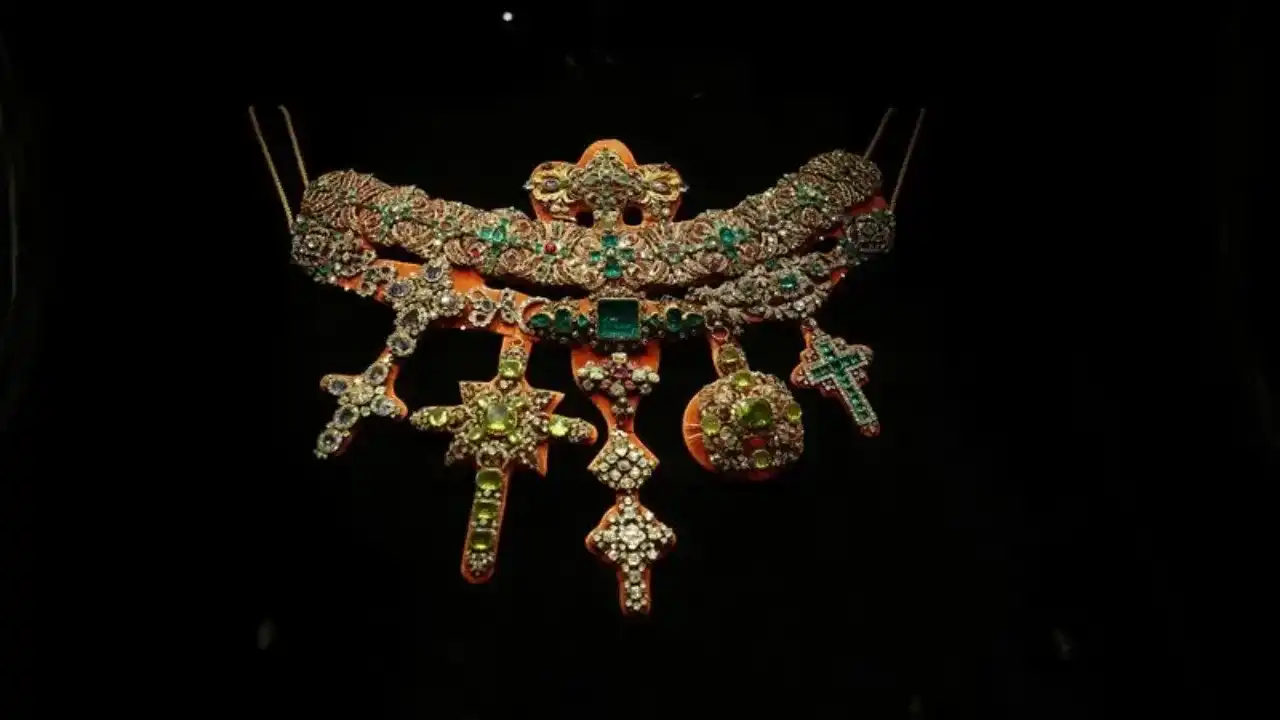
Naples' San Gennaro treasures use photographic fingerprints to enhance security after Louvre Heist
With the art world on high alert following the recent theft of jewels from the Louvre, the Tesoro di San Gennaro in Naples has highlighted its innovative method of creating a photographic fingerprint for its priceless gems and artifacts. This technique, developed over more than a decade by a team of gemology experts, involves photographing over 10,000 stones using specialized equipment and microscopes. This process not only aids in the identification of the gems but also provides a forensic fingerprint similar to DNA.
Ciro Paolillo, a former professor of investigative gemology who led the mapping work, emphasized that if the Louvre had implemented a similar security system, the stolen jewels would be easily identifiable, even if they were cut or altered. This method could potentially hinder thieves from reselling the stolen items. However, it remains unverified whether the Louvre has conducted comparable analyses on its stolen gems.
Laurence des Cars, the director of the Louvre, has previously expressed concerns about the museum's security, noting inadequate coverage from exterior cameras and a lack of monitoring on the window through which the thieves gained entry. Following the theft, the Paris prosecutor announced that suspects had been arrested but withheld details to avoid compromising the investigation.
The San Gennaro treasures are a remarkable collection of sacred art and jewels assembled over seven centuries from donations by popes, royalty, and affluent individuals. Among these treasures is a cross adorned with emeralds and diamonds, gifted by Joseph Bonaparte, and a mitre encrusted with nearly 4,000 precious stones. The collection, which is not owned by the Vatican but by the people of Naples, is managed by a lay institution called the Deputazione.
Despite Naples' high crime index, the museum has not reported any robberies since reopening to the public in 2003. Security measures include anti-theft windows, military patrols, and an alarm system. Riccardo Carafa d'Andria, vice president of the Deputation, reassured that the mapping of the stones would allow for their recognition if theft were to occur.
Historically, the Treasure of San Gennaro has faced threats, including a failed robbery attempt by the Camorra mafia in 1975, after which the treasures were stored in a vault for nearly 30 years. The deep cultural reverence for the treasure among Neapolitans is evident, with locals expressing a strong commitment to protecting their patron saint’s legacy.