Revolutionary VR and AI system detects autism spectrum disorder with over 85% accuracy
Researchers have developed a new system that uses virtual reality and artificial intelligence technologies to detect Autism Spectrum Disorder (ASD) in children with an accuracy exceeding 85%, surpassing traditional diagnostic methods.
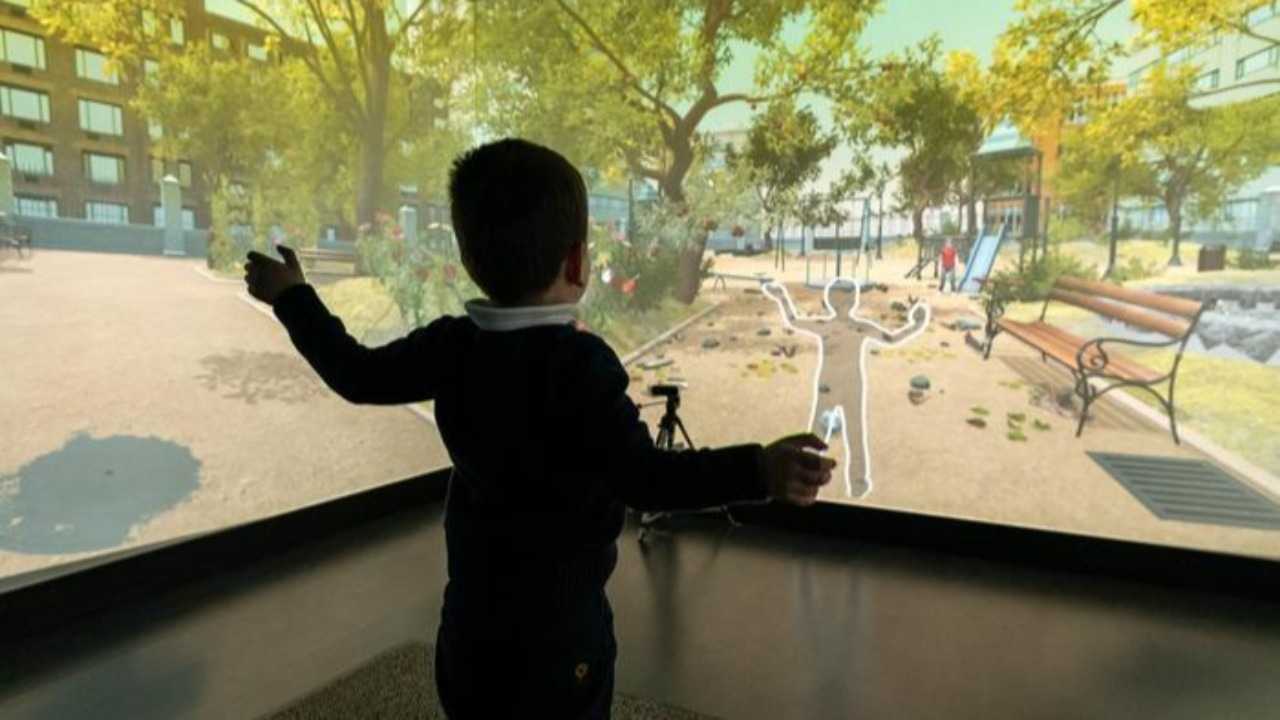
System FeaturesThe system relies on monitoring children's movements and their visual focus patterns while performing tasks in immersive virtual environments, allowing for more natural interactions compared to traditional testing settings. It employs a deep learning model to identify behavioral indicators associated with autism, enabling rapid and efficient diagnosis at a low cost. The system utilizes commercially available screens and cameras, making it widely applicable.
3DCNN ResNet TechnologyThe system, known as 3DCNN ResNet, was developed at the Human-Tech Institute at the Polytechnic University of Valencia (UPV). It achieved high accuracy, outperforming conventional methods that typically rely on manual tests.
The new model can assess autism behaviorally and showed impressive results, achieving accuracy over 85% after evaluation. The findings of this research were published in the journal Expert Systems with Applications, where the team analyzed children's movements during multiple tasks in a virtual environment using AI to detect symptoms of autism.
Mariano Alcañiz, director of the Human-Tech Institute, stated, “Virtual reality allows us to use familiar environments that elicit realistic responses, mimicking how children interact in their daily lives, which is a significant advancement compared to traditional tests that often produce artificial responses. Through this environment, we can study more realistic reactions and gain a deeper understanding of autism symptoms.”
System ComponentsThe system consists of a virtual environment displayed on the walls of a room or a large screen, integrating live images of the child while performing tasks. Cameras capture and analyze the child's movements. After processing these movements during the virtual experience, the system provides a diagnosis with better efficiency and accuracy than traditional methods.
Alcañiz added, “This approach unifies the autism detection process by analyzing biological indicators linked to behavior, motor activity, and gaze direction. The system requires a large screen and commercially available cameras, making it less expensive than traditional manual testing methods. This system will facilitate diagnosis and can be integrated into any specialized center.”
Collaboration and Future DirectionsThe research team at the Human-Tech Institute has spent eight years improving early detection tools for ASD in collaboration with the Red Cenit Center for Cognitive Development. They propose modifying and training the new intelligent model to analyze the movements of children with autism in other tasks. Alcañiz noted, “This opens the door for future studies on motor symptoms of autism, focusing on understanding movement patterns in children with ASD during activities like walking or speaking.”