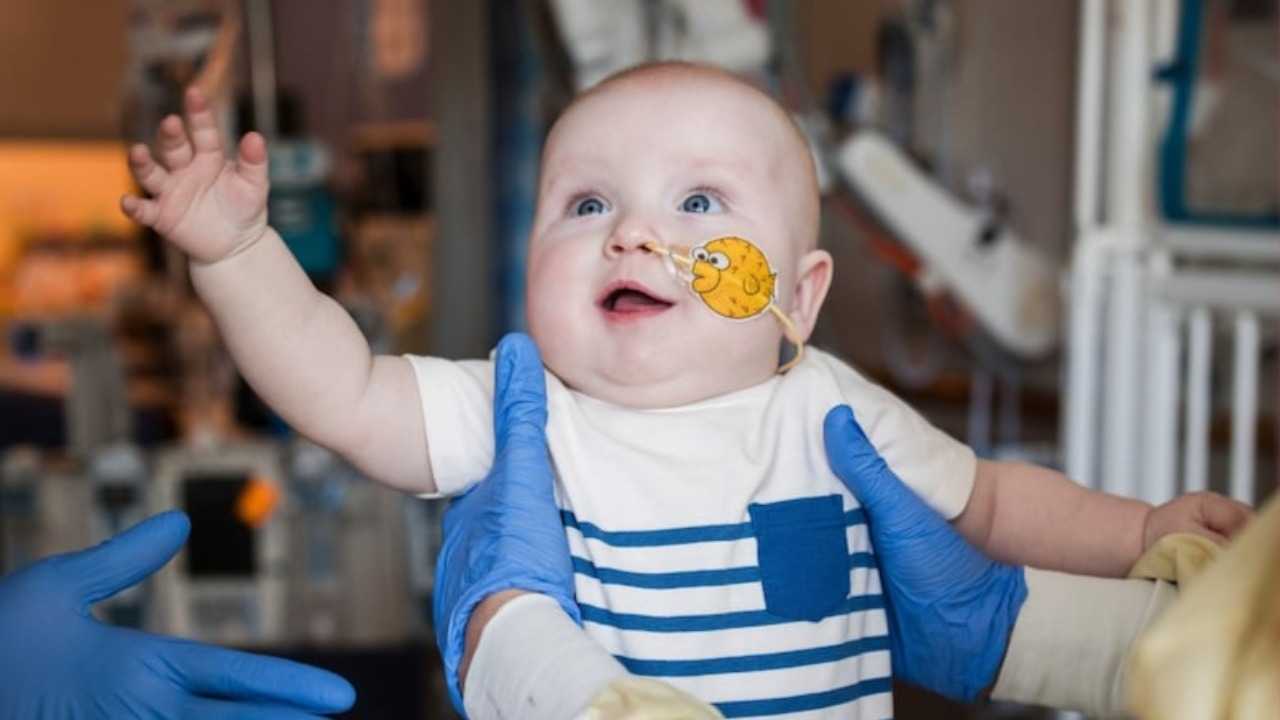
Baby Saved by Groundbreaking Personalized Gene-Editing Therapy
At just a week old, baby KJ was diagnosed with CPS1 deficiency, an ultra-rare genetic disorder affecting only 1 in 1.3 million newborns. The condition leads to toxic ammonia buildup in the body, often proving fatal within the first week of life. His parents, Kyle and Nicole Muldoon, were told he might never develop normally and would likely need a liver transplant. But instead of opting for comfort care, they chose to fight for his life.
According to The New York Times, KJ has now made medical history as the first person to receive a personalized gene-editing treatment, tailored precisely to fix his unique genetic mutation. Developed in record time, the therapy used a cutting-edge base-editing technique—an advanced form of CRISPR—to correct a single faulty DNA letter. The results have been promising.
The custom treatment, wrapped in protective lipid molecules, was designed to deliver an editing enzyme directly to his liver cells. Once there, the CRISPR system located the exact genetic error and corrected it. Within two weeks of the first infusion, KJ could consume normal protein levels—a major milestone for a CPS1 patient.
This innovative approach bypasses the traditional years-long drug development cycle. Instead of crafting a single drug for a large population, scientists created a treatment specifically for one patient. The same process could eventually be used repeatedly with slight alterations for others with rare genetic mutations.
Dr. Kiran Musunuru of the University of Pennsylvania led the scientific charge, collaborating with a large network of researchers and companies like Danaher Corporation. Their combined efforts, driven by urgency and supported largely by federal funding, produced a therapy in months rather than decades.
KJ received three doses of the gene-editing therapy over several weeks. Though he still requires some medication, his response has been remarkable. He's hitting developmental milestones, and his risk of brain damage has diminished significantly.
Experts believe this breakthrough could revolutionize treatment for not only rare conditions but also more common genetic disorders like cystic fibrosis and sickle cell disease. Dr. Fyodor Urnov of UC Berkeley called it “a triumph for publicly funded biomedical research.”
While KJ’s long-term outlook remains uncertain, his story has already transformed what's possible in genetic medicine—and may be the beginning of a new era in personalized treatment.