Two newly discovered Bach organ works unveiled in Germany
Two long-lost organ works composed by a teenage Johann Sebastian Bach were unveiled in Germany on Monday, in what experts hailed as a major cultural breakthrough. The two solo organ pieces, created while Bach was working as an organist and teacher in the town of Arnstadt in Thuringia, first drew scholarly attention more than 30 years ago. Only now, however, have researchers conclusively proven their authorship after identifying the individual who copied the manuscripts.
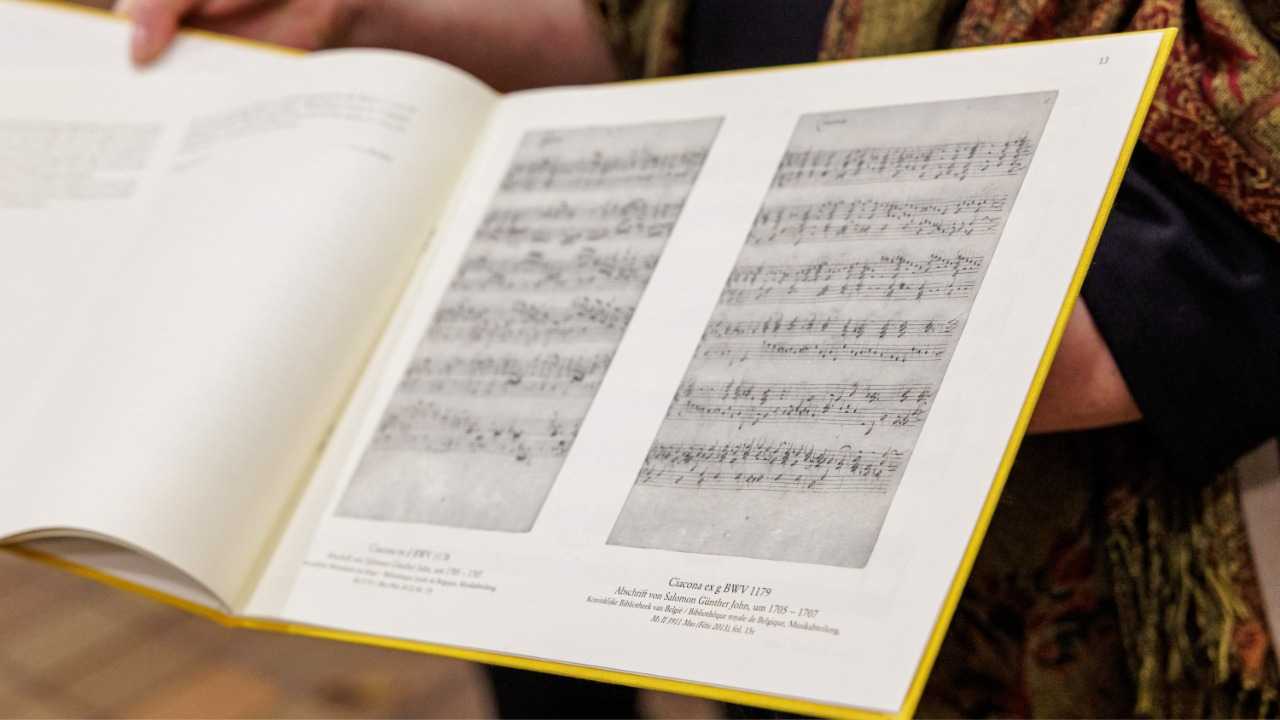
The compositions — the Chaconne in D minor, BWV 1178, and the Chaconne in G minor, BWV 1179 — were officially added to Bach’s catalogue on Monday. They were performed publicly for the first time in roughly 320 years at St. Thomas Church in Leipzig, the historic site where Bach served as cantor for nearly three decades and where he is buried.
Before their debut performance, Germany’s Culture Minister Wolfram Weimer praised the discovery as a “global sensation” and a “great moment for the world of music,” saying it brought joy to countless Bach admirers.
Bach scholar Peter Wollny first encountered the manuscripts in the Royal Library of Belgium in 1992. Although the works were unsigned and undated, several stylistic elements immediately struck him as uniquely characteristic of Bach’s early period, around 1705, when the composer would have been just 18 years old. The challenge was confirming the identity of the scribe who copied the music, since Bach himself often had students transcribe his compositions.
Years later, researchers found handwriting resembling that of the manuscript in a 1729 letter written by Salomon Guenther John, a former pupil of Bach in Arnstadt. Yet because the letter was written decades after the presumed date of the organ pieces, the match was not strong enough to serve as final proof.
The breakthrough came only recently, when earlier samples of John’s handwriting were uncovered. These samples matched the handwriting in the organ manuscripts, providing the decisive evidence scholars had long sought. “I had been searching for the missing piece of the puzzle for years,” Wollny said. “Now everything fits together. We can state with certainty that the copies were made around 1705 by Bach’s student Salomon Guenther John.”
Ton Koopman, the Dutch organist and president of the Bach Archive who premiered the works on Monday, described them as “high-quality compositions” that showcase the brilliance of a young Bach. “People often assume genius appears later in life, but this proves otherwise,” he said. Koopman added that organists everywhere would welcome the new additions to the repertoire for their virtuosity and vitality.
The D minor chaconne runs about six and a half minutes, while the G minor piece lasts roughly three and a half. Their discovery adds to a series of recent finds credited to the Bach Archive, which has uncovered several previously unknown works, including an organ piece found in 2008 and a long-lost cantata rediscovered in 2004.