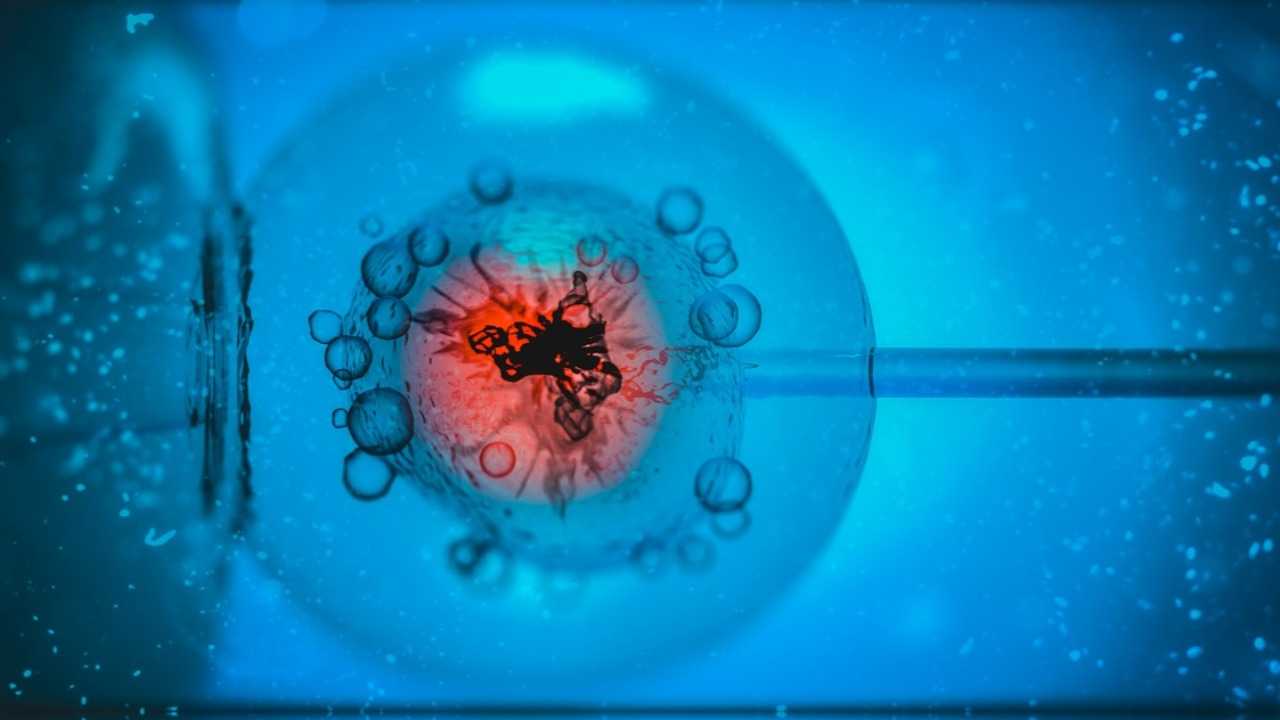
AI tools help choose best embryos for IVF
Artificial intelligence (AI) is increasingly being used to help select the most promising embryos for in vitro fertilisation (IVF), raising both hope and ethical questions. IVF allows millions of children to be born each year to parents who struggle with infertility, but its success rate varies widely and declines with maternal age.
Nearly 50 years after the first IVF birth, AI is now assisting clinicians in identifying embryos with the highest potential for implantation, Nathalie Massin, head of the IVF clinical unit at the American Hospital of Paris, told AFP. The hospital performs over 2,300 IVF procedures annually and uses an embryoscope, a time-lapse camera that continuously records embryo development.
Previously, data on embryo shape, symmetry, and cell division was only partially used. AI tools, particularly those using machine learning, can now analyse this information to help doctors select embryos most likely to result in successful pregnancies or suitable for freezing. This reduces the number of costly IVF cycles by identifying embryos likely to have abnormalities associated with miscarriage, without manipulating their genetics.
Frida Entezami, co-leader of the IVF department, emphasised that humans remain in control of decisions, with AI as an advisory tool. The hospital recently adopted an AI system from Israeli start-up AIVF, which is being trialled internally with the goal of halving the number of cycles needed to achieve pregnancy. AIVF can predict with 70% accuracy which embryos are free of genetic abnormalities, a significant improvement given that around half of pre-implantation embryos currently show such issues.
AI can also optimise hormone injection timing before egg retrieval and improve sperm selection in samples with low counts. Anne-Claire Lepretre, head of France’s Biomedicine Agency’s ART unit, highlighted that AI can learn from failed attempts, increasing the chances of success in future cycles. This personalised approach may reduce the emotional strain of the often long and psychologically challenging IVF process.
However, ethical concerns remain. Julian Koplin, a bioethicist at Australia’s Monash University, warned that AI in embryo selection means computers influence which children are born. Patients with moral objections should be informed and ideally allowed to opt out. Despite these concerns, reviews suggest AI’s use in embryo assessment can be ethically acceptable with proper oversight.
Experts like obstetrician Michael Grynberg stress the need for better markers beyond traditional egg and sperm morphology to improve IVF outcomes. While AI offers more efficient and personalised IVF, transparency and patient choice remain crucial in these deeply personal decisions.